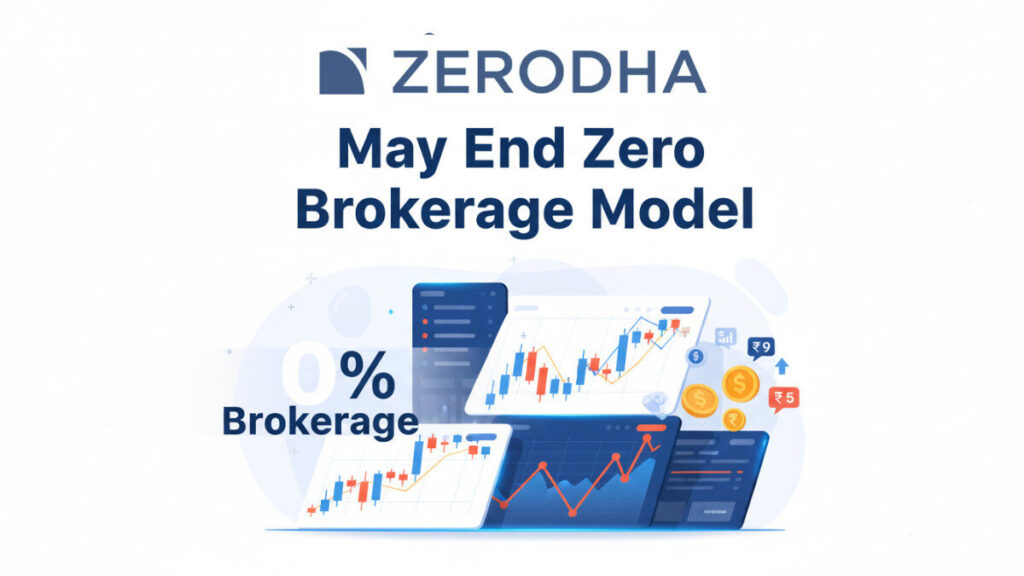
India’s largest stockbroker, Zerodha, is reportedly considering ending its zero brokerage model, a strategy that helped it become the country’s leading brokerage platform.
The Bengaluru-based company disrupted the market in 2010 by introducing free equity delivery trades and flat ₹20 charges on intraday and F&O trades. This move attracted millions of retail investors, especially young traders, and pushed traditional brokers to cut costs.
Now, industry insiders suggest that Zerodha might start charging even on equity delivery trades, ending the “zero-brokerage” promise that has been its biggest selling point.
Why Zerodha May Change Its Model
- Rising operational costs: Compliance, technology, and regulatory costs have increased.
- Revenue pressure: Competitors like Upstox, Groww, and Angel One are offering aggressive offers to capture market share.
- Changing market dynamics: With over 1.5 crore customers, even small charges could generate huge revenue.
What It Means for Traders
If Zerodha introduces delivery charges:
- Small investors may feel the pinch.
- Active traders might not be heavily impacted since intraday/F&O already carry fees.
- The company could remain competitive due to its strong trust, platform stability, and ecosystem (Kite, Coin, Varsity).
Zerodha’s Position
While Zerodha has not officially confirmed the move, co-founder Nithin Kamath has previously hinted that the zero brokerage model may not be sustainable forever. He has also stressed the importance of maintaining a profitable and debt-free business without chasing unrealistic valuations.
Summary Table
| Factor | Current Model | Possible Change | Impact |
|---|---|---|---|
| Equity Delivery | Free | Brokerage may apply | Higher cost for long-term investors |
| Intraday & F&O | Flat ₹20/trade | No change expected | Neutral for traders |
| Customer Base | 1.5 crore+ | Retention may face test | Some shift to rivals possible |
| Business Strategy | Low-cost disruption | Profit sustainability | Boost in revenue |